Style & Ideas 9 min read
Layering the Zen Master Doodle Martial Arts T Shirt for cooler days
A martial-arts doodle calls for thoughtful layers rather than a themed outfit. Build a cooler-day combination around the Zen Master tee with practical choices about warmth, openings, colour and proportion, including what to change when your layers compete with the design.
A martial-artist doodle can disappear beneath a jacket long before the rest of an outfit looks busy. That is the particular challenge of layering this tee: giving an illustrated design some breathing room while still dressing for a chilly journey, a warm café or an afternoon spent moving between the two.
The answer is not to keep every layer open regardless of the weather. It is to build an outfit that works both with the tee revealed and with it covered. Choose the warmth you need first, then consider how openings, hems and surrounding colours affect the drawing when it comes into view.
There is also no need to turn the martial-arts reference into a theme. Familiar trousers, everyday shoes and one well-chosen middle layer can give the motif a setting without competing with it.
Let the martial-arts doodle carry the reference
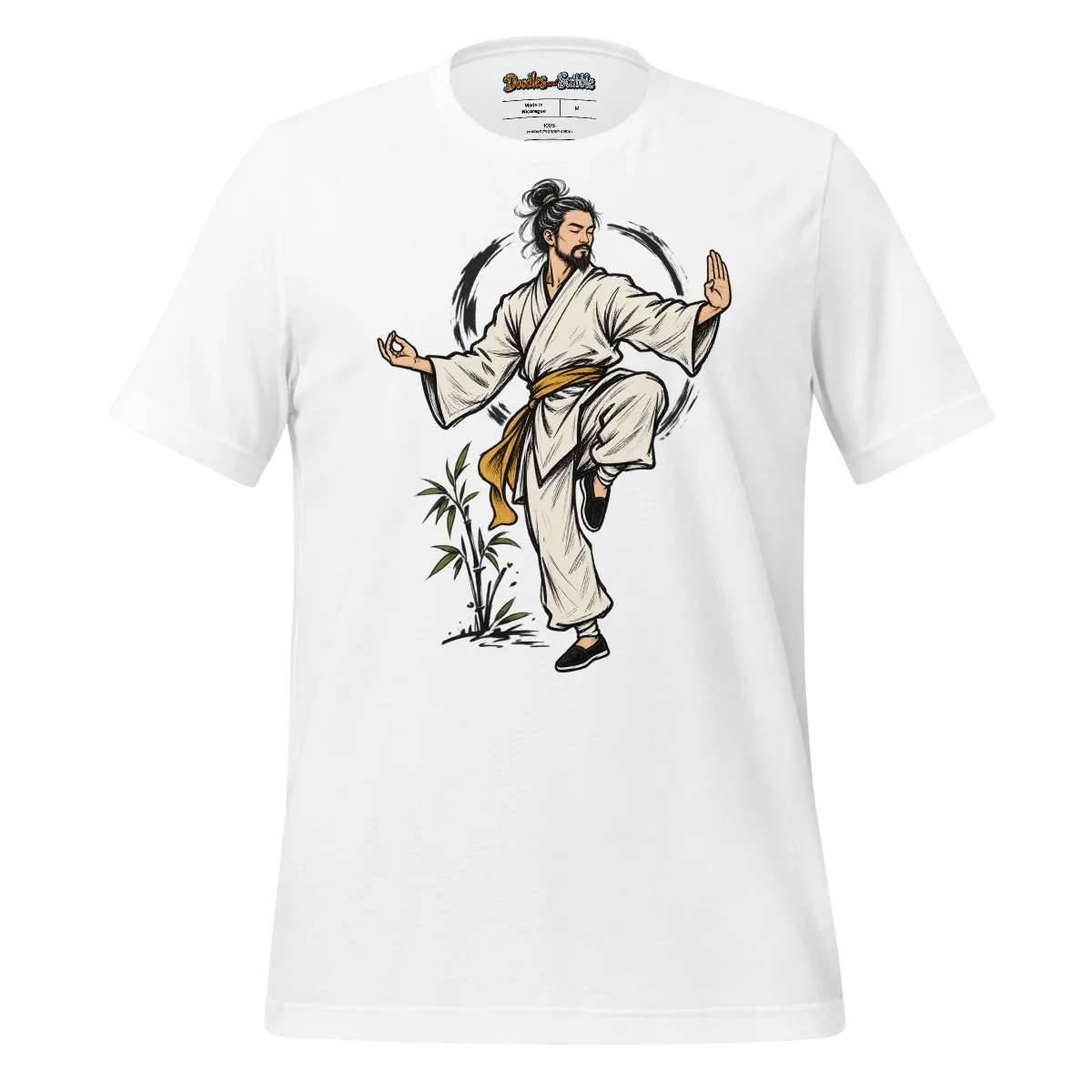
The Zen Master Doodle Martial Arts T Shirt with Martial Arts Artwork supplies a specific point of interest through its martial-artist motif. Start there rather than looking for other pieces that repeat the subject. A second graphic or conspicuously themed accessory may make the outfit feel more literal than you intended.
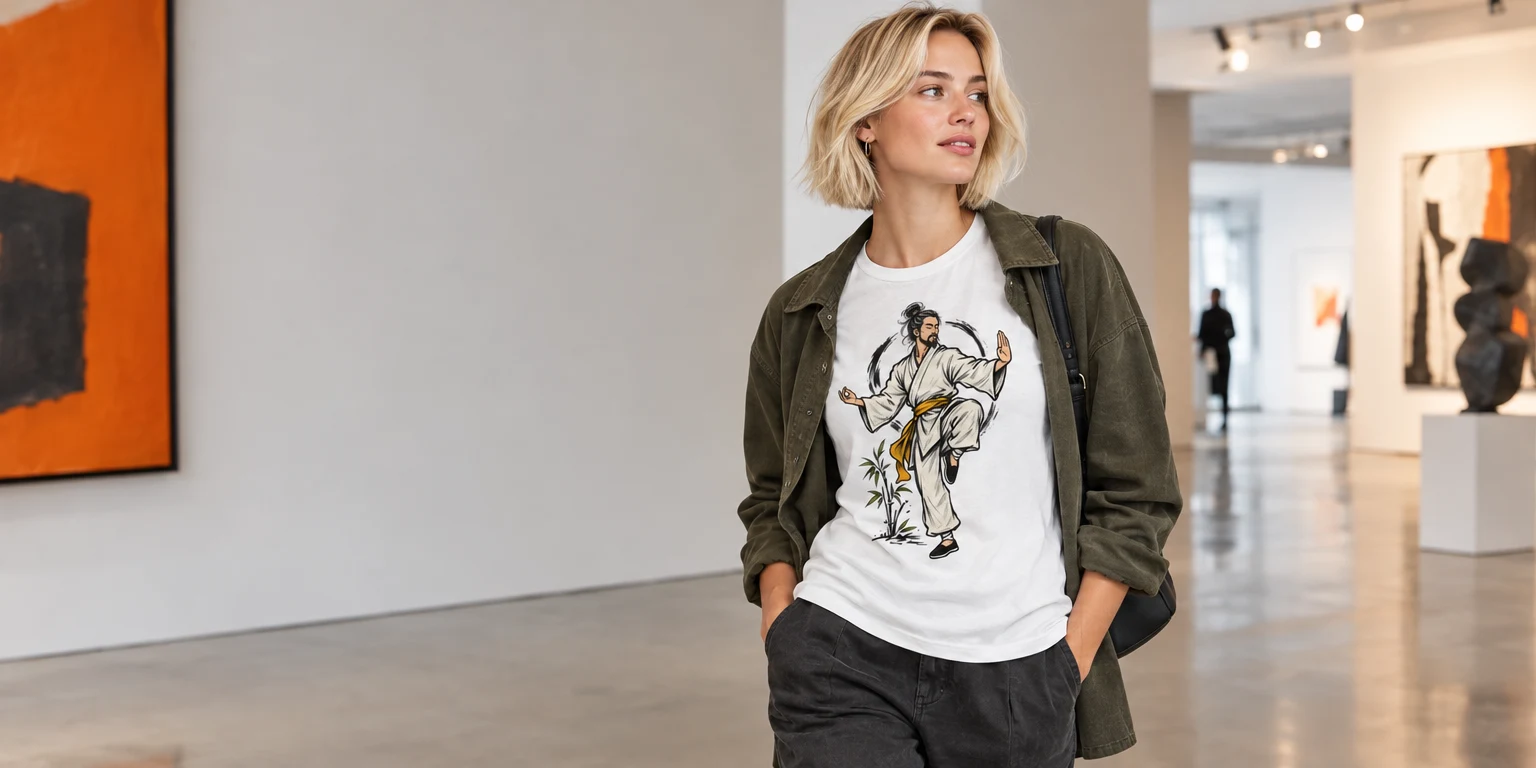
Try plain straight-leg trousers and an uncomplicated overshirt as a starting combination. The trousers establish a steady outline, while the overshirt gives you a removable layer. Neither needs to echo the drawing. This leaves the tee as a personal detail rather than making every garment explain the same idea.
Restraint need not mean a completely smooth, neutral outfit. A textured cardigan or visibly worn denim can add interest without introducing another picture. The useful distinction is between a different surface and a competing motif: one adds depth, while the other asks for attention.
If you already enjoy patterned clothing, you need not abandon it. Simply decide which piece leads. A bold checked layer will probably become the first thing someone notices; the doodle can then be a detail appreciated closer up. That is a valid choice, but different from making the artwork the outfit's focal point.
Plan warmth around the day rather than the photograph
A T-shirt outfit that looks balanced with an open jacket may be impractical if you spend the whole morning outside. Separate the visual decision from the weather decision. The tee can be your starting garment without being responsible for keeping you warm on its own; no particular warmth or fabric weight is established here.
Think about your longest continuous stretch outdoors, not just the temperature when you leave home. A short walk between heated spaces suggests a different arrangement from waiting outside or taking a lengthy evening stroll. Choose outerwear appropriate to those conditions, even when it covers the design completely.
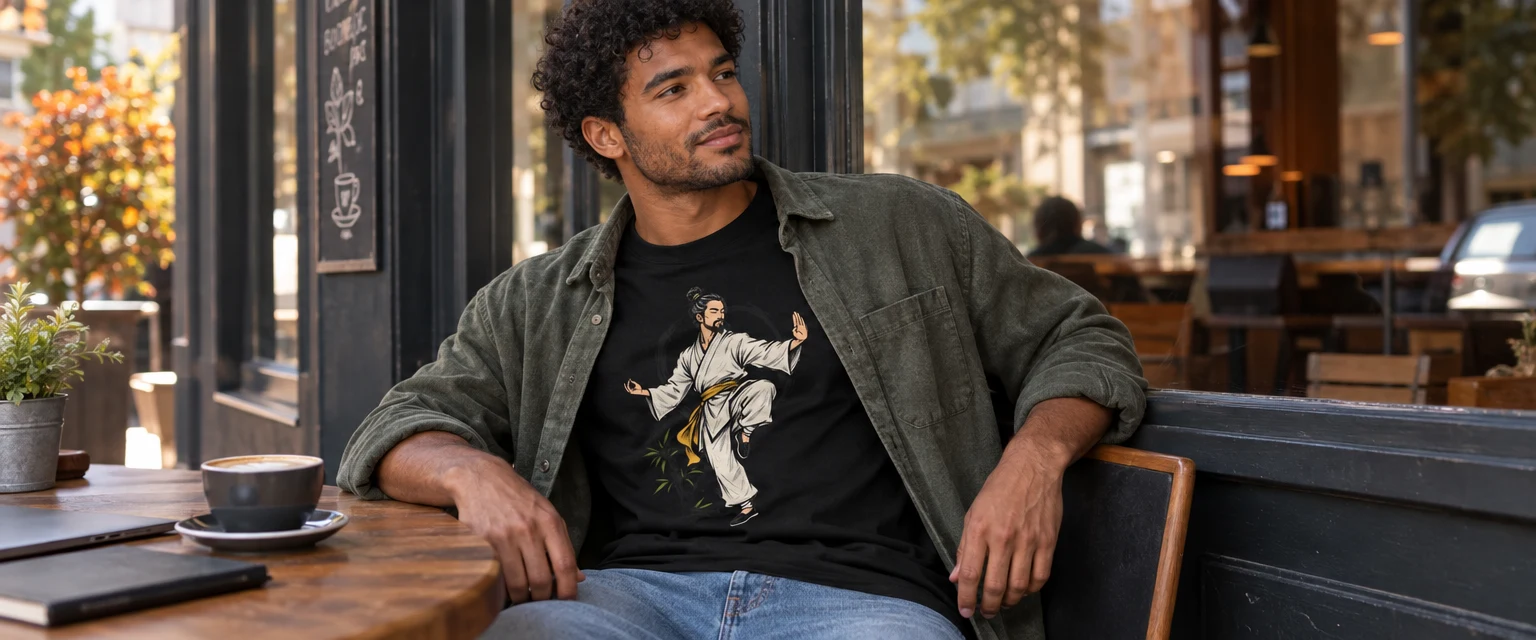
- Mostly indoors — consider the tee with one removable cardigan or overshirt, adding outdoor protection for the journey as needed.
- Frequent transitions — a buttoned or zipped middle layer lets you adjust without taking everything off.
- Extended time outside — prioritise suitable outerwear and comfortable movement over keeping the motif on display.
A middle layer should have a job. It might provide useful warmth after your coat comes off, or let you adjust between rooms. If it only adds another collar and hem, try the outfit without it. Fewer layers can be easier to manage, provided the remaining combination suits the conditions.
Also consider what happens to removed clothing. A bulky middle layer may become something you carry around all afternoon. If you expect to take it off repeatedly, check that you are happy to hold or store it rather than choosing solely for the fully dressed silhouette.
Check the opening before choosing the frame
An open layer does not automatically reveal a design. Its edges may overlap the artwork, or shift across it when you sit down. Placement matters, so check the actual tee rather than assuming the motif will sit within a cardigan or jacket opening.
Printful's T-shirt design placement guide explains the general principle that front designs can remain visible beneath an open hoodie or loose flannel, while outerwear can obscure designs in other positions. That supports checking the relationship between design placement and opening; it does not establish where the artwork sits on this particular tee.
Put on your proposed combination and stand with your arms relaxed. Then sit, reach forward and close the outer layer. These ordinary movements give a more useful answer than holding the jacket edges apart in a mirror. If visibility requires constant adjustment, either change the layer or accept that the design will be revealed when you remove it.
Three useful middle-layer choices
- An overshirt creates a relatively defined outline. Choose a plain one if you want the drawing to remain the main decorative element. A prominent collar or chest pockets will add their own visual structure.
- A cardigan offers a softer-looking surround. It can suit a relaxed indoor setting, although its edges may fall differently when seated, so check rather than relying on the standing view.
- A zip hoodie makes adjustment straightforward. The trade-off is the extra hood, zip and neckline detail, particularly if a coat sits over it.
Choose between them by what you want to wear after taking your coat off. An attractive outdoor arrangement is only half a solution if the indoor version feels unfinished or too warm.
Sort the silhouette from neckline to hem
When a layered outfit feels awkward, the problem is often several edges competing rather than the tee itself. A crew neckline, shirt collar, hood and coat collar can create a crowded upper section. Before adding an accessory to bring things together, try removing one of those elements.

For example, if you want a hooded middle layer, consider whether your chosen coat leaves enough room around it. If you prefer a prominent coat collar, a simpler cardigan beneath may give a calmer result. These are alternatives, not rules: the aim is an arrangement you can move in without repeatedly rearranging the neck.
Next look at the hems. A visible strip of tee beneath an overshirt can look deliberate, but several staggered lengths may draw attention away from the motif. Let the clothes settle naturally, then decide whether the lower edge looks coherent from the front and side.
- Keep the tee untucked when its hem sits comfortably with the layer above and does not gather awkwardly.
- Try a tuck if you want a clearer waistline, but keep it only if sitting and reaching remain comfortable.
- Change the middle layer if its length creates a proportion you dislike; the answer need not be altering the tee.
Trousers help balance the overall outline. Straight legs are a useful starting point beneath a visually generous upper half. Wider trousers can work too, especially if you keep the layers above relatively uncomplicated. Narrower trousers create more contrast with a broad overshirt, which you may enjoy, but check whether that contrast makes the torso dominate.
Finish by looking at the whole outfit rather than the artwork alone. An illustrated design does not need to dictate every proportion. The clothes should still make sense when viewed from a distance, where the drawing may not be readable.
Use colour to choose what gets noticed
Begin with the tee in front of you, rather than building a palette around its name. You do not need pale neutrals to communicate calm, and you do not need sportswear colours to acknowledge the martial-arts motif. Choose whether the surrounding layers should create contrast or blend into a quieter whole.
A noticeably darker or lighter open layer makes the opening itself more apparent. That can give a simple outfit definition, but it also means the frame may attract attention before the artwork does. Keep the trousers relatively quiet if you want to avoid several competing blocks of contrast.
Closer tones offer another route. A tee, middle layer and trousers in neighbouring shades can make the outfit feel less divided. The trade-off is that the individual layers become less distinct. If the result looks flat to you, change one surface or one shade rather than introducing several new colours.
For a practical experiment, compare the same tee and trousers with two layers you already own: one contrasting, one closer in tone. Look from a few steps away. Choose the contrast if you prefer a clearer outline; choose the closer tone if you want the outfit to read as a whole before the details register.
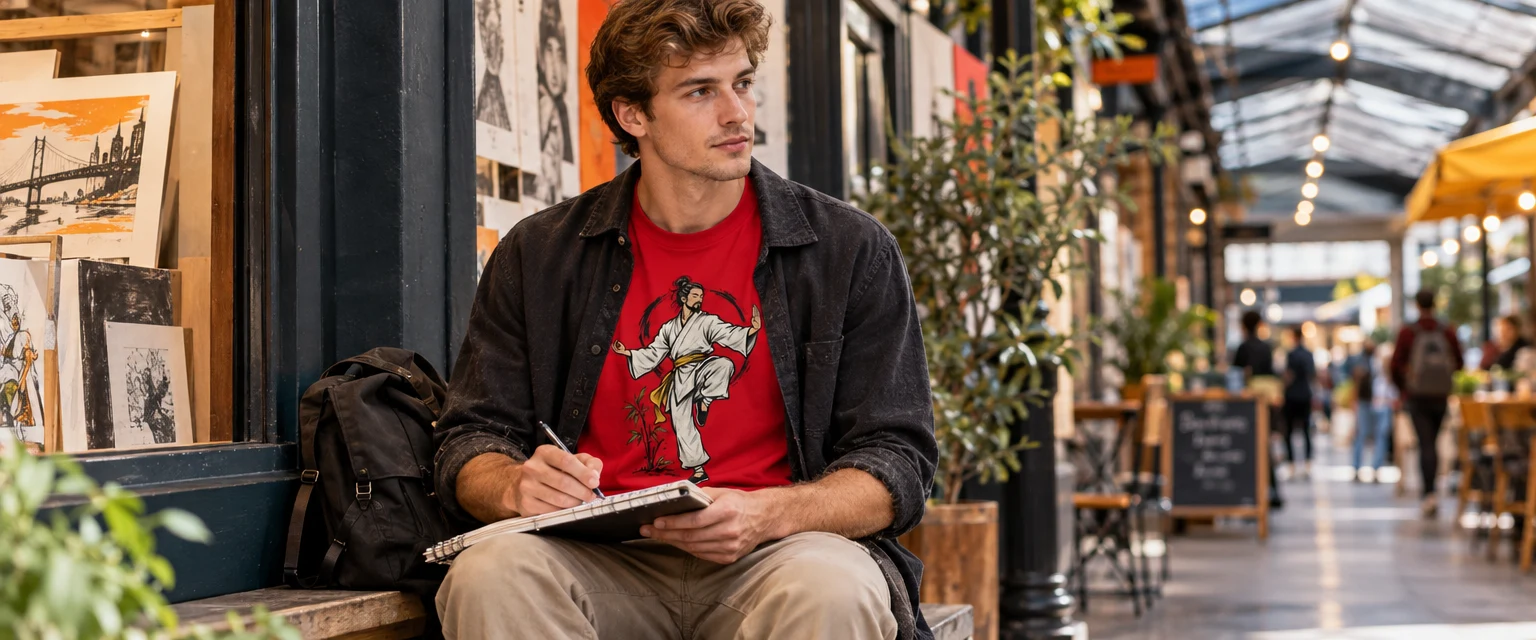
The principle behind choosing a statement piece applies even to a martial-arts motif. A statement need not occupy most of the garment. Giving one detail room to register can be more effective than adding another decorative element to reinforce it.
Try one outfit across three real moments
Illustrative example — imagine a Saturday with a walk to a café, an hour indoors and a later journey home. Start with the Zen Master tee, plain trousers and an overshirt you already own. Add outerwear suitable for the forecast and shoes appropriate to the walking involved.
For the walk, close the outerwear if needed. There is no styling failure in covering the artwork. At the café, remove the coat and assess the overshirt as the visible top layer. Leave it open only if that feels comfortable and its opening works with the actual design placement.
If the room becomes warm, removing the overshirt should leave a complete outfit rather than one that depends on its frame. This is why starting with trousers and shoes you like alongside the tee matters. The middle layer should add an option, not rescue the underlying combination.
Before heading home, put the layers back on and check that the tee has not bunched at the waist or twisted beneath them. If the arrangement repeatedly needs fixing, make a note of the cause. A crowded sleeve, awkward hem or slipping opening suggests a specific change next time, rather than a reason to replace the entire outfit.
The same test works for a casual office or an evening at a friend's home, where appropriate to the setting. Ask what you will wear when seated, where the removed coat will go, and whether the remaining layers feel right. Those questions are more useful than trying to keep the doodle visible throughout every transition.
Make the final check about movement
Before leaving, close every layer you expect to fasten outdoors. Reach forward, lift your arms gently and sit down. Check for pulling, bunching and crowded sleeves. This is a test of the combination you have assembled, not a claim about the tee's fit.
Then take off the outerwear and look again. If the middle layer works naturally, the hems settle and the tee feels comfortable without adjustment, you have a flexible outfit. If something catches your eye for the wrong reason, change that one element before reconsidering everything.
Keep the final decision simple: useful warmth, manageable layers and enough visual space for the martial-artist doodle whenever it is revealed. The design can be the reason you chose the tee without becoming a demand that the rest of your day has to accommodate.