Style & Ideas 7 min read
Choosing the right fit for the Zen Master Doodle Martial Arts T Shirt
A front graphic makes T-shirt proportions worth checking carefully. Use a favourite tee, a few flat measurements and a clear idea of how you want to wear it to choose the Zen Master Doodle Martial Arts T Shirt without relying on vague size labels.
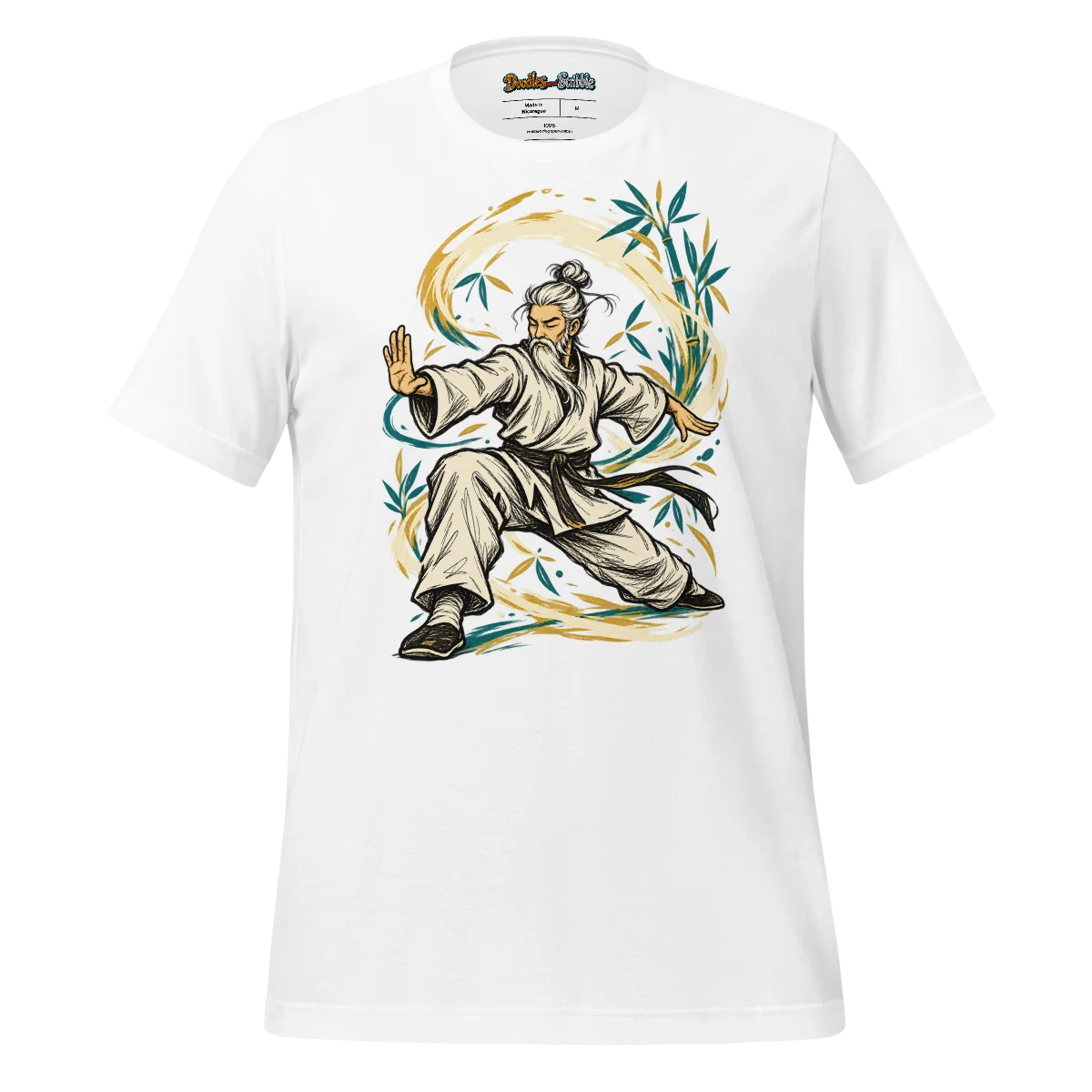
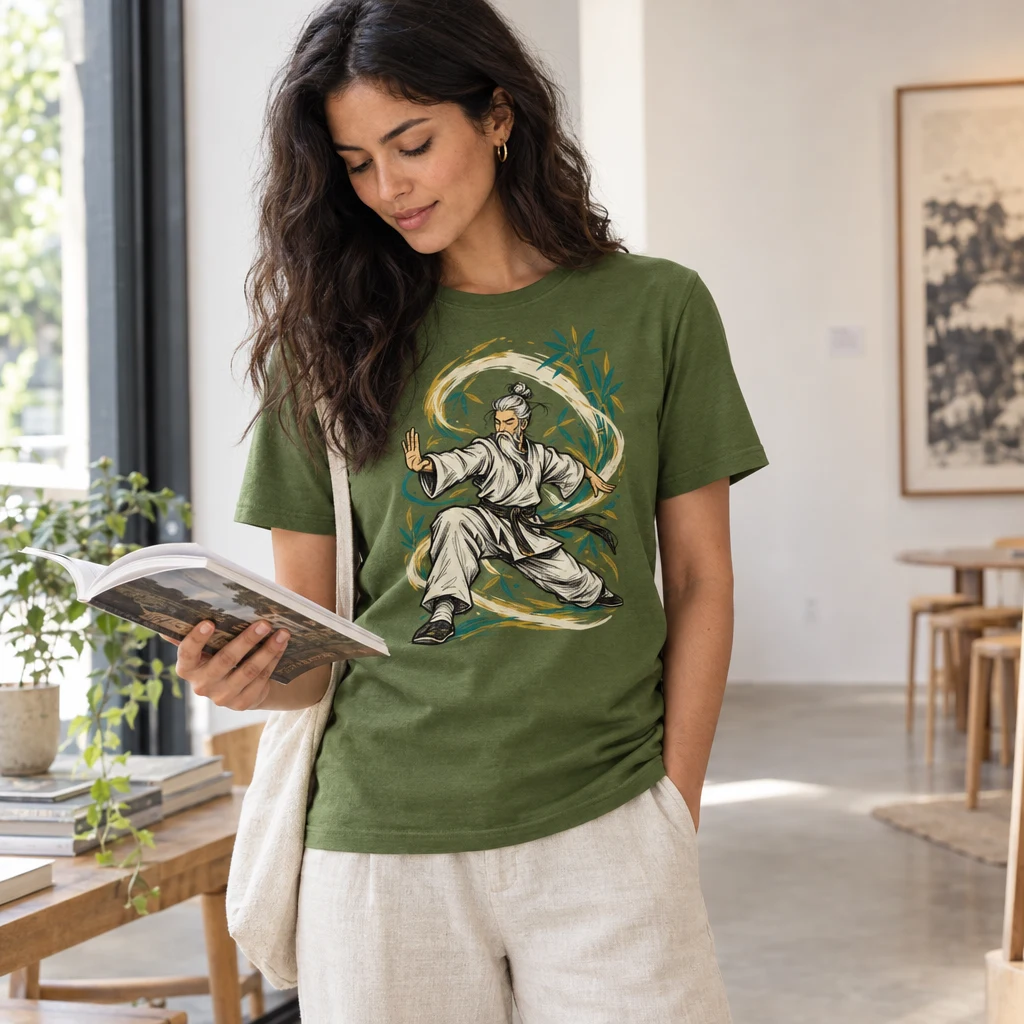
The martial artist doodle gives this T-shirt a clear focal point, but the space around it matters too. A closer outline can make the front graphic feel more prominent; a roomier outline can give it more breathing room. Neither is automatically better. The useful question is which proportions you want to wear, rather than which size letter you usually buy.
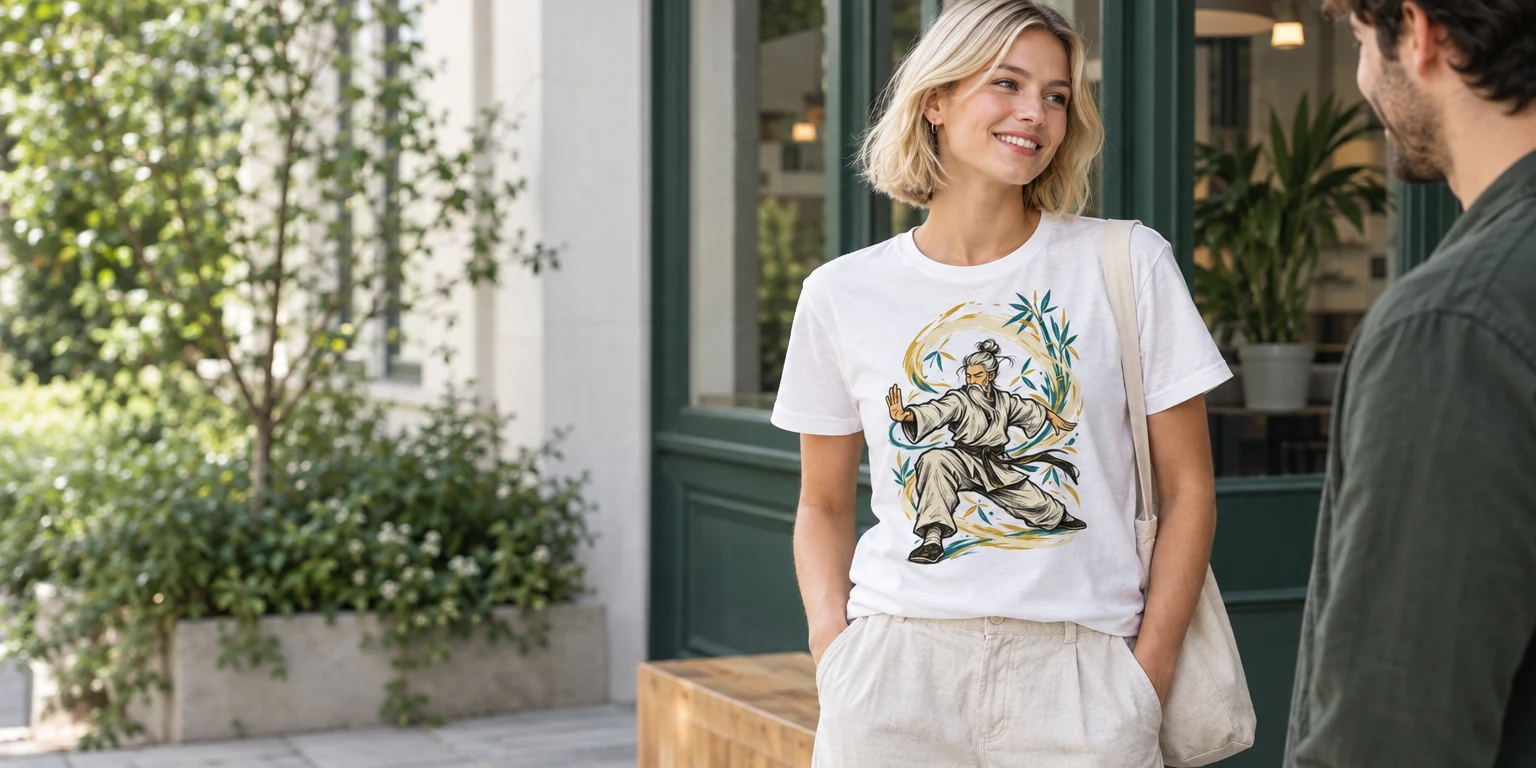
Choosing the right fit and size for the Zen Master Doodle Martial Arts T Shirt with Front Print starts with measurements, not a styled photograph. The supplied product details identify a classic crew neck and front graphic, but do not establish garment measurements or whether it runs small or large. There is no sound basis for a blanket recommendation to size up or down.
Start with a reference tee you already enjoy wearing, then compare it with any size information provided on the Zen Master Doodle Martial Arts T Shirt with Front Print listing. If essential measurements are missing, ask for them rather than guessing.
Decide what a good fit should do
Before reaching for a tape measure, choose the result you want. A neat everyday outline, a deliberately relaxed silhouette and a tee worn mainly under another layer are different briefs. They may lead you towards different measurements even when your body measurements have not changed.
Put on your reference T-shirt with trousers similar to those you plan to wear with the Zen Master design. Waistband height changes where the hem appears to finish, so judging it with a very different trouser rise can give you an unhelpful target.
- For a neater outline, look for enough room to sit and reach without the front pulling, with a hem that works untucked.
- For a relaxed outline, decide where extra width is welcome and how much additional length you would accept.
- For layering, check whether the sleeves and torso sit comfortably beneath your usual outer layer without bunching.
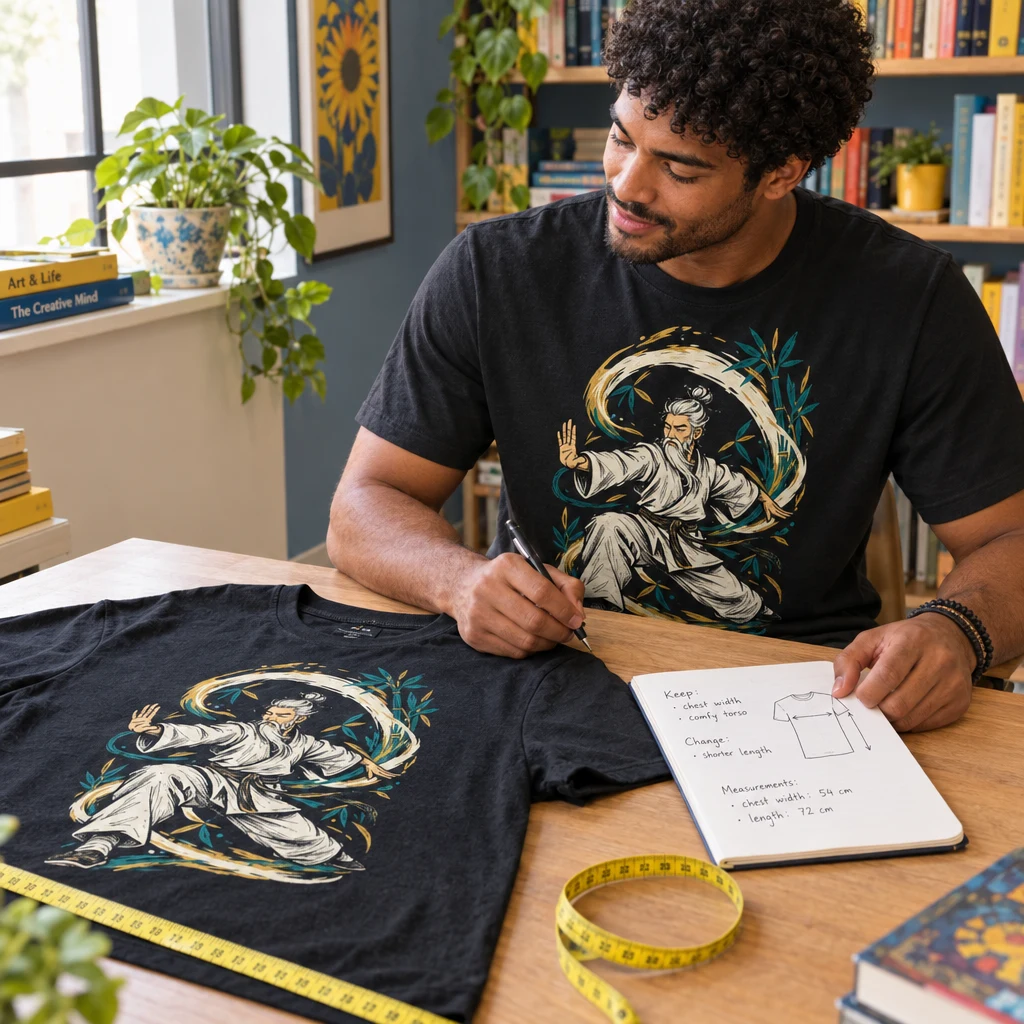
Look at the reference tee from the front and side. Does the hem finish where you want it? Does the torso hang comfortably, or do you keep adjusting it? A shirt can look right while standing still yet become distracting during an ordinary seated afternoon.
Make a short note of what you want to keep and change. “Keep this chest width, but find a shorter length” is a more useful starting point than “I usually buy medium”. It separates your preference from a label that may mean something different on another garment.
Measure a favourite tee and compare like with like
Choose a reference shirt because you like its fit, not simply because it carries your usual size. Lay it flat on a table and smooth the fabric without stretching it. Avoid measuring it while it is hanging, scrunched or pulled taut.
Printful’s T-shirt measuring guide explains flat measurements including chest width and shoulder-to-hem length, and comparison with a favourite shirt. That supports the measuring method here; it does not establish the specifications or fit of this particular Doodles tee.
- Record chest width. Measure straight across the flat shirt at the underarm area, unless the product chart specifies a different point.
- Record length. Measure from the top of the shoulder to the hem, matching the chart’s starting point where a diagram is available.
- Check the units. Keep your notes and the chart in either centimetres or inches, rather than comparing mismatched numbers.
- Check what the chart measures. A garment measurement and a recommended body measurement are not interchangeable.
Flat chest width is not your chest circumference. If a chart gives body measurements, follow its instructions rather than treating your flat-shirt number as equivalent. Likewise, do not assume a column labelled “chest” means width unless the accompanying explanation confirms it.
If sleeves or shoulders are your recurring difficulty, note those reference measurements too, but compare them only where corresponding product information is available. A chest-width match alone cannot tell you everything about sleeve room or shoulder position.
Write down the measurements before browsing size options. This prevents a familiar size label from nudging you towards an option that does not actually match the proportions you wanted.
Resolve the trade-off between width and length
Choosing a larger size is not a precise way to request extra room in just one place. Check each available measurement separately rather than assuming how the size steps work. The chest width you prefer may come with a length you like less.
If your reference tee has a comfortable width but feels too long, automatically choosing a smaller size could sacrifice room you wanted to keep. Conversely, choosing more width for a looser look may not give you the hem position you had in mind. Read the actual figures before deciding.
Illustrative example — You want a relaxed tee for weekend café visits, worn untucked with straight-leg trousers. One chart option comes closest to your favourite shirt’s chest width but is longer than your target. Another is closer in length but narrower. The decision is not which label sounds right; it is whether you would rather accept a longer hem or less room through the torso.
Try the likely compromise with your reference tee. If you dislike a long hem because it conceals too much of the trousers, extra width may not compensate. If you spend much of the day seated and dislike fabric pulling across the front, comfortable room may matter more than a particularly short outline.
A partial tuck is a styling option, not a sizing solution. It changes the visible hem and can introduce folds through the front. Do not rely on it to rescue dimensions you already know you will find awkward.
Give the front doodle room to read
The animated martial artist is the reason to choose this design over a plain crew neck. Its character-led approach also places it within the Legendary Warriors collection. Here, the practical styling task is to keep that single front motif legible rather than competing with it.
Notice how your reference tee behaves across the chest and stomach. Persistent pulling or deep folds can interrupt the view of a front graphic. More room may help create the outline you prefer, but excess fabric can also fold; the loosest option is not automatically the clearest backdrop.
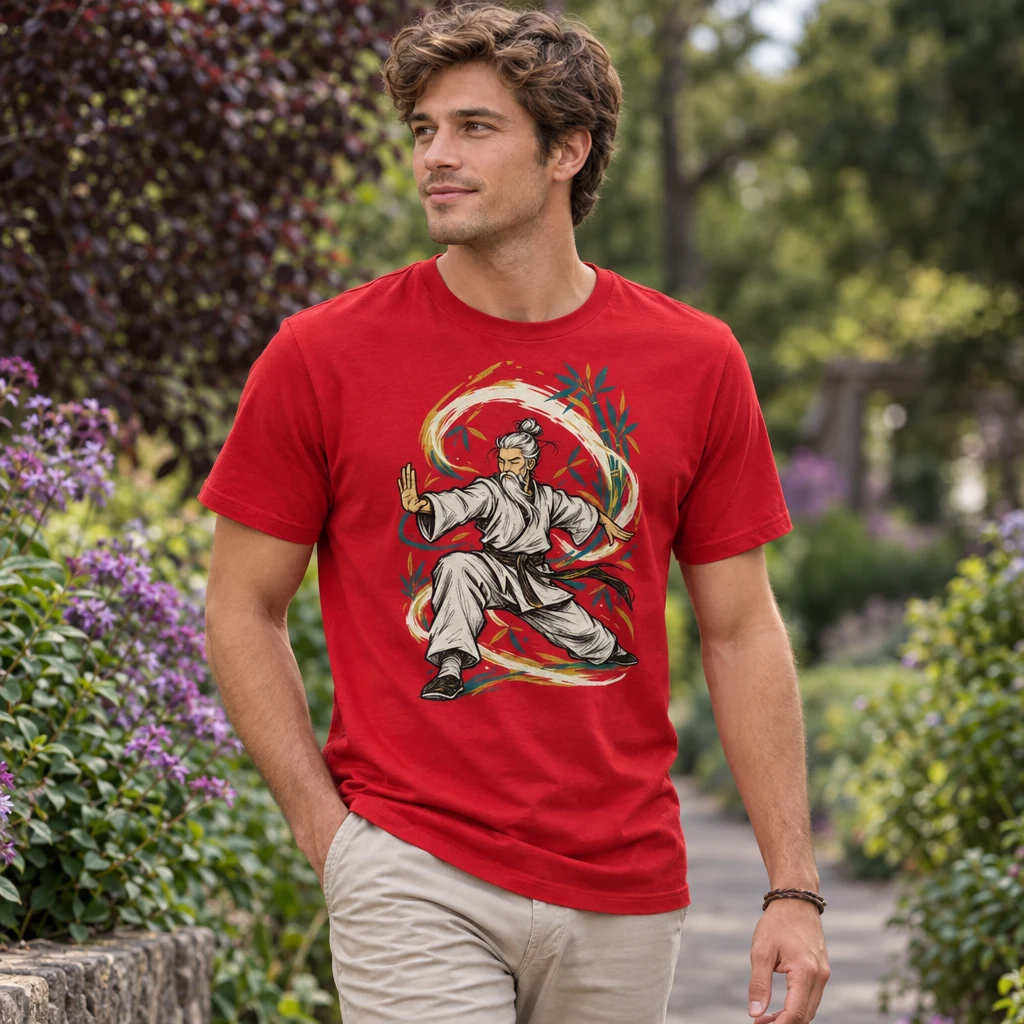
For an uncomplicated outfit, try plain trousers and let the doodle provide the detail. A straighter trouser shape could balance a roomier tee, while a neater tee could give a more defined contrast with fuller trousers. These are options to test in the mirror, not rules tied to a particular body type.
An open overshirt or jacket can frame the central motif, but its edges may cover part of the artwork. Try your reference tee underneath your intended layer and notice how much of the front remains visible. Also check whether the T-shirt hem extends below the outer layer in a way you like.
Use supplied product imagery to understand the artwork, not to calculate garment measurements. If size-specific previews are available, examine the one relevant to your choice. Do not assume that the graphic grows with every size or that its exact dimensions can be inferred from a photograph.
Make the final decision with a movement check
Before choosing, spend a few minutes moving in the reference shirt you measured. Sit down, reach forward and lift your arms. Then put on your usual outer layer. Note discomfort or repeated adjustment rather than expecting the hem to remain completely still.
Keep this an everyday check. The martial arts motif is a design subject, not evidence that the shirt has particular training or performance properties. Choose around the activities and clothing combinations you actually have in mind.
Finish with three questions. Does the closest chart option offer the width you want? Is its length an acceptable compromise? Have you checked what is known about the front graphic without treating imagery as a size guarantee?
If those answers depend on missing information, pause and ask for clarification. The strongest choice is one you can explain simply: the measurements suit your preferred outline, the hem works with your trousers, and the front gives the doodle the space you want.