
New Drops 6 min read
Science T-shirts for a day away from the lab
An apple, a sloth and a mouse give three science jokes a way into ordinary conversation. See what changes when the drawing does some of the work, then try the designs with the jeans or overshirt you already wear on a day off.
If someone says the answer is obvious, what makes you want to check it anyway? The Still Testing The Obvious | Doodle Art turns that moment into an apple drawing with little green details. It’s a good place to start with science T-shirts if you like jokes that take a second to land.
The Science collection has plenty of words to read up close. From across the room you’re more likely to see an apple or a sloth first. Think about which drawing you would wear on its own, then read the line that goes with it.
Start with a phrase you would actually say
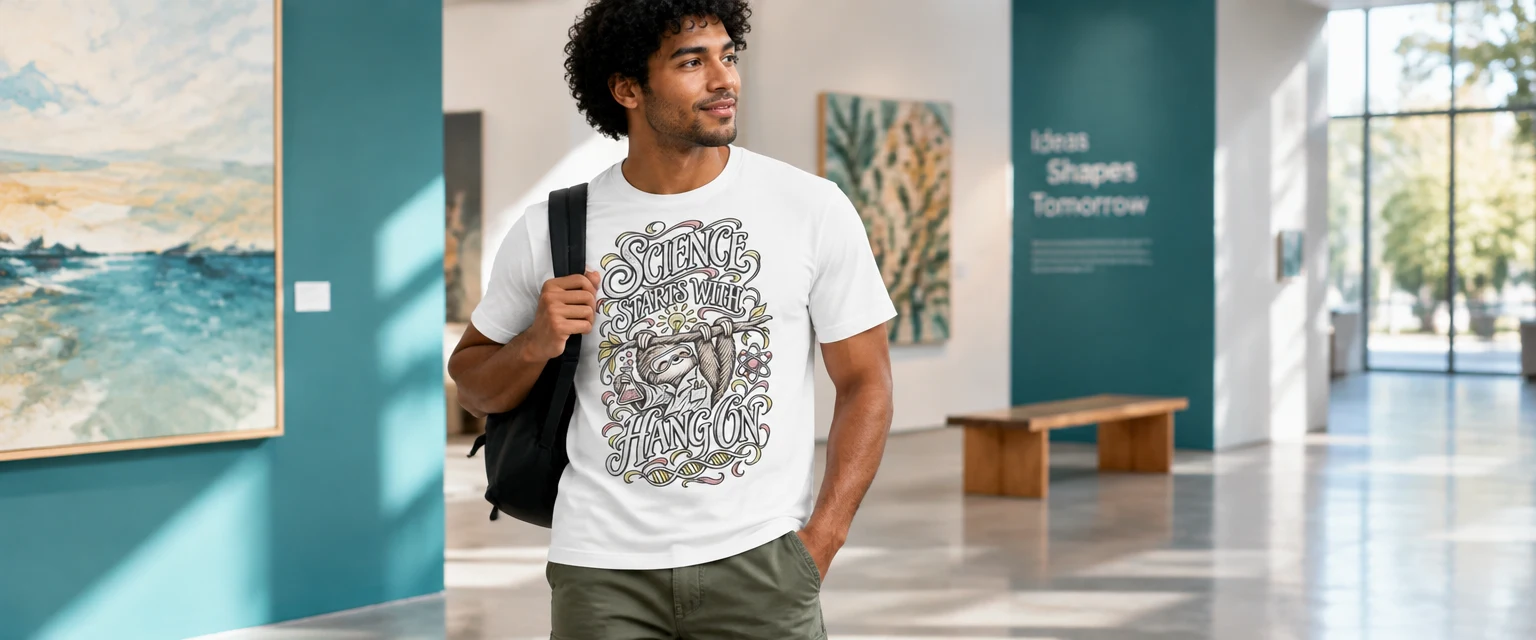
The Science Starts With Hang On | Doodle Art has a sloth tucked among the lettering. “Hang on” can be something you say when an explanation has a hole in it. The picture gives that familiar line a literal second meaning.
Imagine saying “hang on” when a friend points out something odd, or when an explanation does not quite add up. If that sounds like you, the wording has somewhere to belong outside work. The sloth adds a literal reading of hanging on, giving the joke a visual route as well as a verbal one.
Look at how the large words sit above and below the sloth. You can spot the character first and then read the sentence around it. The white shirt in the gallery photo is paired with olive trousers, so the green details in the print have a bit of company.
If you’re choosing this one for a gift, show someone the full print and see what catches their eye. A sloth fan might pick it straight away. The wording can still work for someone whose friends are used to hearing them stop halfway through a thought with “hang on”.
Decide how much of a lab reference you want
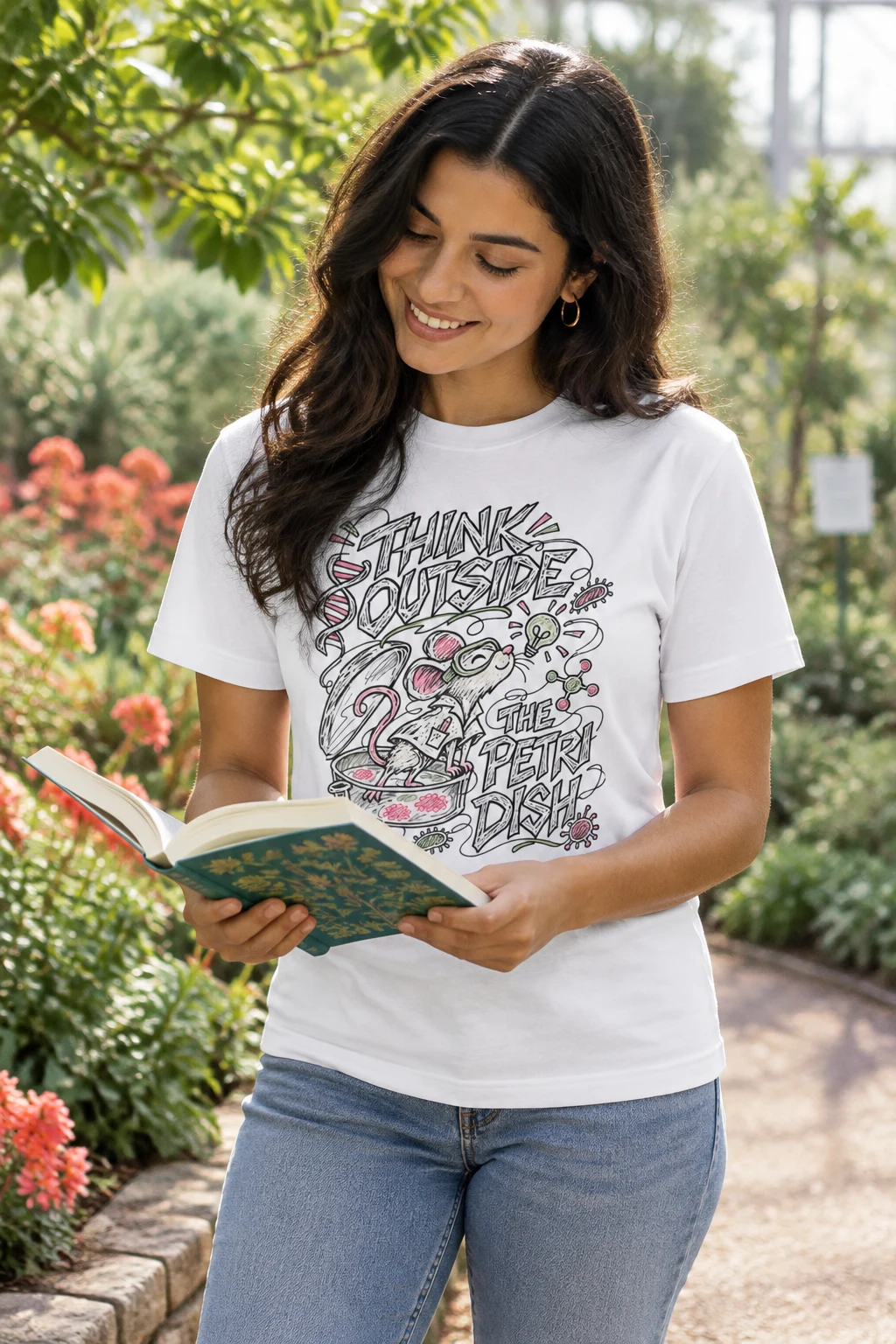
The Think Outside The Petri Dish | Doodle Art puts a mouse next to the petri dish. The line borrows “think outside the box” and changes the container. You can enjoy the mouse first and get the wordplay as you look closer.
A petri dish is a shallow container used for growing cultures. That small reference gives the joke a place in a lab. The pink touches and all the little surrounding marks keep the drawing busy, so give it a little time on the full product photo.
If you enjoy a joke that starts a conversation, the unfamiliar container in this one does the work. Someone might recognise the mouse before the dish. An explanation only takes a sentence, which makes it a good graphic for a day out or a bookshop visit.
To see how much of the drawing you’d leave visible, hold an open jacket over the sides of a graphic tee you already own. On the petri dish design, the lettering and the illustration share much of the chest. A narrow opening can hide some of the story.
Use dry wording to set the tone
Probably Within Tolerance | Doodle Art takes a drier approach, using callipers and gears alongside a deliberately uncertain phrase. In measurement, a tolerance is an allowed amount of variation. “Probably” introduces the doubt that makes the wording funny: precision is being discussed without quite committing to it.
“Probably” is doing a lot of work here. It’s the sort of word you hear after someone has measured a shelf, looked at the gap and decided to get on with it. The callipers make that slight hesitation clear before you’ve read the whole phrase.
Still Testing The Obvious has a similarly restrained verbal feel, but its question is different. It suggests that even a familiar answer deserves another check. The science-inspired apple gives that thought a concrete image, while the wandering lines and small colour accents described in the design keep it from feeling like a formal diagram.
To choose between them, consider the kind of joke you naturally make. If you often question an assumption, the apple may feel closer to your voice. If your humour leans towards qualified answers and careful caveats, Probably Within Tolerance may be the better match. Pick the phrase you will still like when nobody comments on it.
Let the drawing decide how quiet the outfit feels
Look at a product photo small enough to see the whole tee. Some of these drawings are packed with marks that blend together at a distance. The apple has a distinct outline and the sloth has a recognisable face. Use the close-up to see what each print gives you when you get nearer.
One easy way to wear a detailed drawing is to repeat a small colour from it elsewhere. A green cap could pick up the apple’s leaves. If you prefer a quiet outfit, start with the plain blue jeans in the studio photo and let the white around the drawing do the framing.
For a quieter outfit, try plain trousers and an open shirt or jacket. Leaving the surrounding clothes uncomplicated gives the doodle space and avoids another slogan competing with the words. Check where the open layer falls: if it hides the phrase's key word, the visible fragments may not give the joke much chance.
The sloth also works with jeans and a plain overshirt. If you carry a shoulder bag, try it with the shirt and check where the strap falls. For a graphic with words near the edges, sliding the strap towards the shoulder can leave the middle of the picture clearer.
Check the practical details before choosing
Pick an outfit you’ve worn recently and picture the tee where your usual top would go. It’s a useful check if you like a drawing on a screen but own few things you’d wear with it. Jeans and a jacket are enough to see whether the combination feels like yours.
Check the individual product page for the colour and size you want, and consult any size guidance provided there. Do not assume a familiar size label guarantees your preferred fit. Where garment measurements are available, compare them with a T-shirt you already enjoy wearing, paying attention to length as well as width.
Also consider how you tend to wear a graphic tee. An open layer may frame the artwork; a closed jacket will cover it. A tuck can change how much of a design remains visible. Use the product image to judge placement before deciding, rather than assuming all four designs will sit identically in your usual outfit.
These designs are on crew-neck tees. Open the colour and size you’re considering before you compare measurements. Look at the front of that colourway, because the space around the drawing is part of how the fine lines and lettering read.
Care for a T-shirt you wear often
Check the garment label first. Printful’s guide to caring for printed clothing explains why care differs by decoration. If the label allows a cool gentle wash, turning the shirt inside out keeps the artwork away from zips and rougher parts of the load.
Read the drying instructions before applying heat, and keep an iron away from the print. If you plan to wear a design often, washing it in the same careful way each time is easier than making a special decision on every laundry day.
If two prints still appeal, open them at the same size and see which drawing you come back to. You might keep looking at the sloth or find another detail around the mouse. Once the drawing is familiar, read the wording again.
The final test is an ordinary one. Picture the tee at lunch or on a weekend walk, with the clothes you already own. Pick the joke you can still hear yourself making when the work day is over.
Find your favourite
The pieces in this story, together in one place.
Explore the collection