Clothing 6 min read
Doodle art inspired hoodies: how to style them your way
Doodle art inspired hoodies make an expressive adult layer easy to wear on repeat. Start with a graphic you genuinely like, then use fit, proportion, colour and practical layering to keep the artwork visible and the outfit comfortably your own.
Doodle art inspired hoodies are an easy way to bring hand-drawn character into an adult wardrobe without making every outfit feel overworked. Choose a graphic that holds your attention, give it visual space, and build around it with proportions and layers that suit your day. The result can be relaxed, considered and genuinely useful far beyond one occasion.
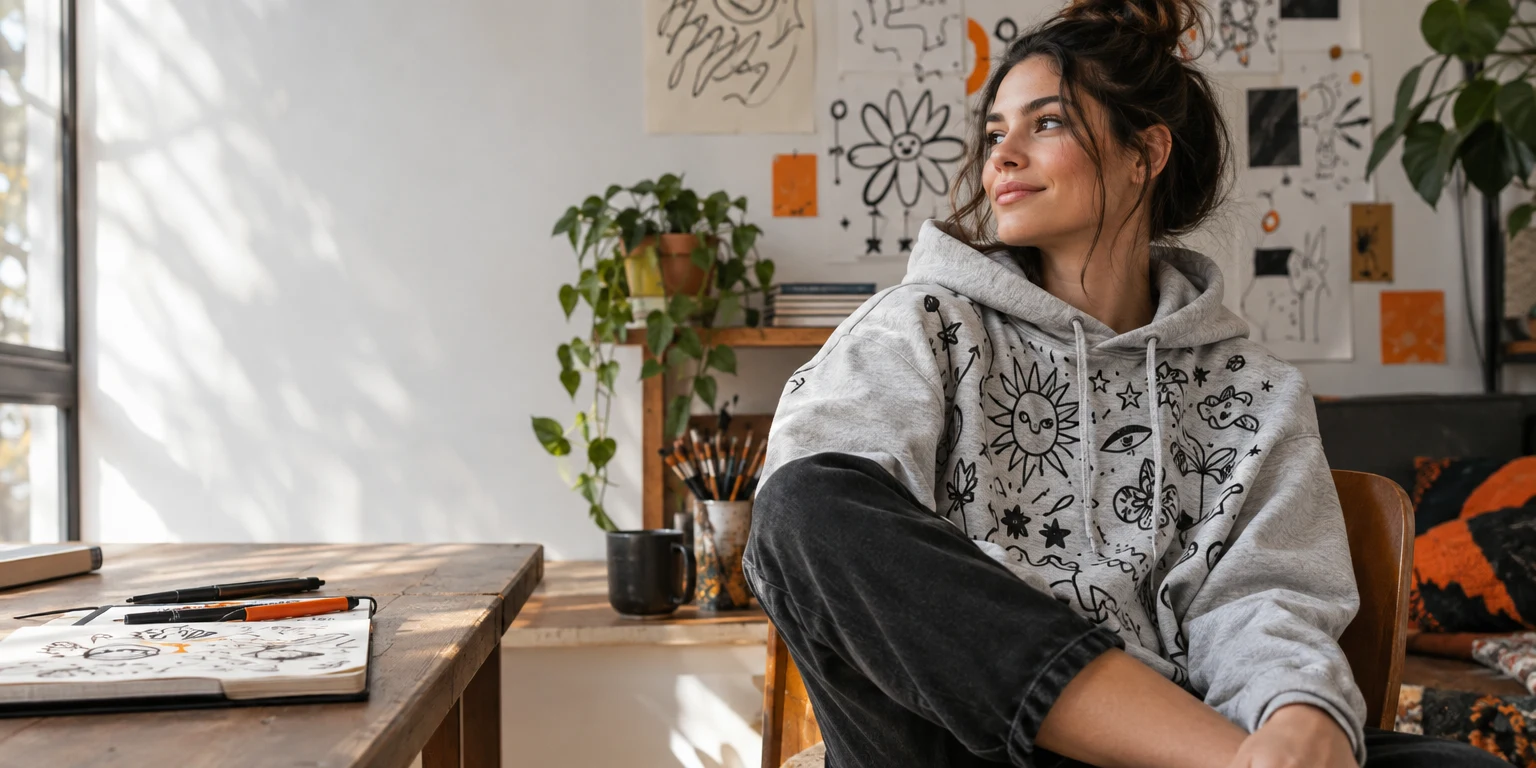
Doodle art inspired hoodies put the drawing at the centre
A hoodie offers a generous canvas for illustration. Front prints, back graphics and sleeve details have room to make an impression, so loose lines, odd characters and clustered marks do not need to be reduced to a tiny detail.
That space is particularly valuable for doodle-led art. The charm often comes from the relationship between lively marks and quieter areas around them. A drawing does not need to fill every inch of fabric to feel expressive. In fact, a little breathing room can make black linework, small surprises and offbeat shapes easier to notice.
Think about where you want the design to do its work. A front graphic becomes part of the outfit’s first impression. Sleeve artwork appears gradually as you move. A back print brings interest to an otherwise simple silhouette. None is a better choice; it depends on whether you prefer your artwork to arrive immediately or reveal itself over time.
The point is not perfection. Hand-drawn work can feel direct because it keeps some of its human energy: a slightly uneven line, an unexpected expression, a composition that is playful rather than pristine. That is what gives a practical warm layer its own point of view.
Use colour and contrast to support the artwork
Monochrome doodle graphics are easy to build into everyday outfits. Black trousers, blue denim, neutral joggers and uncomplicated outerwear create a calm setting for the drawing, without demanding much planning in the morning.
If the artwork includes colour, avoid feeling obliged to match all of it. Pick out one shade in a small detail if you want a more deliberate result: trainers, socks, a cap, bag or even the lining of an open jacket can be enough. One echo looks purposeful. Too many competing colours can make the graphic harder to read.
Colour lovers do not need to retreat into neutrals, either. The useful rule is hierarchy. Let the hoodie be the most active part of the outfit, then make any second statement smaller, quieter or more textural. Calm-coloured cord trousers, for instance, can add depth without fighting the print; a bright accessory can work when everything else is straightforward.
Line and composition can make a simple image feel immediate. Looking at the Tate’s collection and art stories is a useful reminder of how much energy artists can create with shape, spacing and mark-making. The same visual awareness helps when styling a graphic layer: let the strongest element have room to register.
Choose the fit around how you want to move
One drawing can take on a different mood depending on the hoodie’s fit. A roomier shape can make a bold print feel easy-going and streetwear-led. A neater cut can make the same graphic appear sharper and more contained. Use the individual product sizing information, then begin with the silhouettes you already enjoy wearing.
Balance volume, rather than following a formula
A relaxed hoodie often sits well with straight-leg denim, tapered trousers or a simpler lower half when you want a cleaner outline. It can look equally good with wider trousers, but give the outfit one point of definition: a tidier shoe, a more structured jacket or a visible waistband can stop the proportions feeling accidental.
A closer fit opens up another set of options. It can layer comfortably beneath a coat or overshirt, and it can sit well with fuller trousers because the upper half is less voluminous. The artwork still carries personality while the overall silhouette feels more streamlined.
Comfort is not an afterthought. Hoodies earn their place on travel days, slower weekends, walks and casual plans because they allow you to move easily. There is little value in choosing a fit that looks right in theory but stays in the wardrobe. The most successful graphic hoodie is usually the one you reach for without negotiation.
Layer a graphic hoodie without hiding it
Before adding outerwear, decide what you want to show. An open overshirt, unfastened jacket or coat worn open frames a front print rather than covering it. When the main detail is on the sleeve or back, wearing the hoodie as the outer layer may make more sense.
For mild days, a light jacket can add structure without creating unnecessary bulk. When it is colder, a roomier coat can work over the hoodie as long as you can still move comfortably beneath it. A visible hood gives a plain coat a little texture, but it need not turn every look into a styling exercise.
Keep accessories in the supporting role. A plain beanie, simple jewellery, practical cross-body bag or a trainer with one colour echo can finish an outfit neatly. Leaving several pieces ordinary is often the most effective choice; that everyday contrast is what makes illustrated clothing feel wearable rather than costume-like.
If you are looking for an expressive adult layer, explore the current Doodles & Scribble shop and ask a practical question: would you still want to wear this design when the rest of the outfit changes?
Build real-life outfits around one expressive layer
A statement hoodie should not need a special event to justify it. With denim and trainers, it is an uncomplicated daytime option. With darker trousers, cleaner footwear and a structured outer layer, it can feel more deliberate for a casual evening. With joggers or leggings, it becomes an off-duty piece that still has character.
It is also useful for days when temperatures change. A hoodie is easy to add or remove while travelling, running errands or heading out for a walk, and the artwork means the outfit does not feel like an afterthought. Keep the surrounding pieces simple, then let the drawing provide the detail.
For a reliable low-effort combination, start with a neutral base: black trousers, charcoal joggers, blue denim or an uncomplicated skirt. Add the hoodie and either stop there or introduce one small accent. For more definition, use texture and proportion instead of extra graphics: try a jacket in denim, canvas or wool-like texture, or choose footwear that gives the silhouette a cleaner finish.
You do not need to make every outfit look different to make it feel personal. A strong doodle graphic can adapt to the clothes already in your rotation. That versatility is the goal: noticed when you want it to be, but never so precious that it is saved for the wrong day.
Choose a doodle you will want to revisit
Trends may influence the way a hoodie is worn, but the drawing is what will keep it interesting over time. Browse the adult clothing collections to compare graphics, then focus on the one that feels most natural beside your existing wardrobe.
A useful test is to picture it in three ordinary settings: on a quick coffee run, during a journey or errand, and at a relaxed evening plan. If it works in each scene, it is more likely to become a regular rather than a one-look purchase.
Doodle art does not need an elaborate explanation or a fully coordinated outfit. Its appeal can be imperfect, direct and a little unexpected. Let the drawing lead, check the sizing details and use comfort, contrast and proportion to make the hoodie entirely your own.