
Doodle Stories 6 min read
How Faces T-shirts draw a mood
A cat over its notebook, a goose with its chin up and an owl with a thought bubble give three different ways to draw a mood. Look at the eyes, posture and small lines that make the expression clear before you read the words.
Look at the cat’s half-closed eyes on the My Mood Drew This | Doodle Art. It has a pencil and an open notebook, but the look on its face gets there first. These Faces T-shirts give each character one clear gesture to start with. Then the lettering and the smaller marks fill in the rest.
Try covering the words with a hand when you look at the product photo. See what you still know about the character. The cat’s eyes and the goose’s posture give you different clues. The owl needs very little help from the wording to look as if it has just had an idea.
Follow the goose’s lifted chin
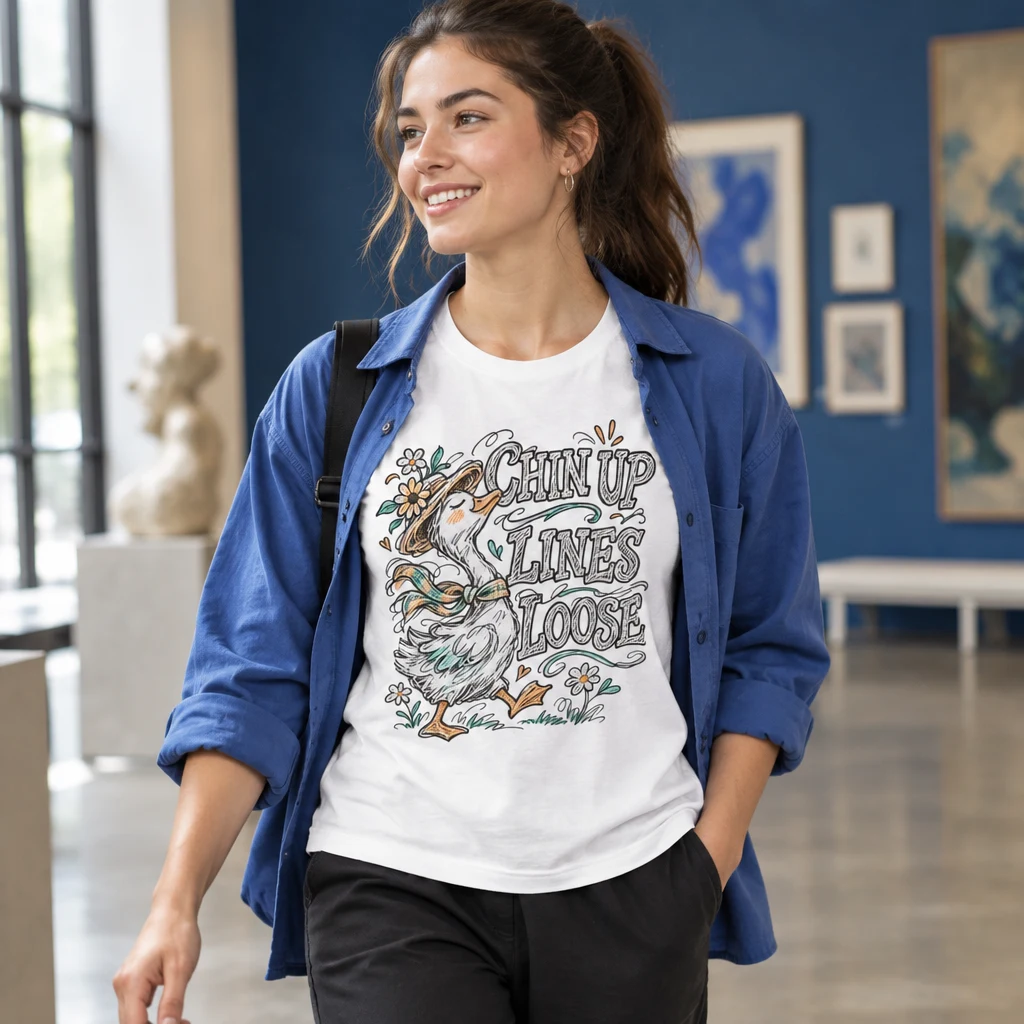
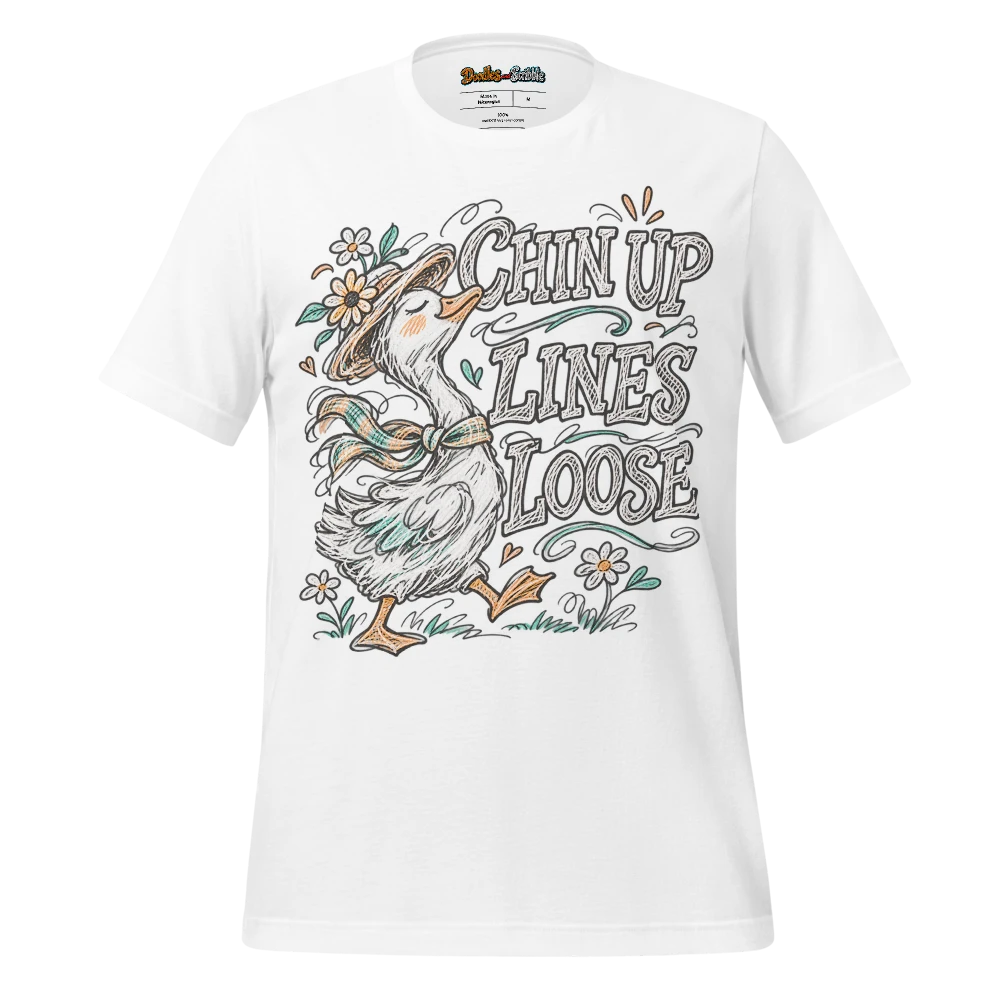
On the Chin Up Lines Loose | Doodle Art, the goose’s beak points upwards beneath a tilted hat. Daisies sit around the hat and near its feet. Find the angle of the head before you read “Chin Up”. That line tells you what the goose is doing even when the small marks blur.
The long neck leads the eye up to the beak. Try following that line first. Then look at how the scarf and the flowers soften the pose. You can read a lifted chin from a few steps away and discover the smaller bits once the shape is familiar.
The words “Chin Up Lines Loose” bring two ideas together. “Chin Up” names the gesture and lends it an encouraging tone. “Lines Loose” directs attention towards the drawing itself. The phrase lets you read the goose as a small note of resilience while also enjoying the wandering marks as marks. There is no need to turn it into a claim about whoever wears it.
The gallery photo puts the tee under an open blue shirt with dark trousers. The blue layer leaves a strip of white large enough for the goose and both halves of the phrase. Try the same check with a shirt you already wear. You may need a slightly wider opening to keep the head in view.
Look at the complete design before zooming in. If you enjoy the lifted posture first and the scribbles second, the drawing is giving you two different viewing experiences. Both count. A graphic does not have to reveal every detail at the same moment.
Let the owl’s eyes lead the reading
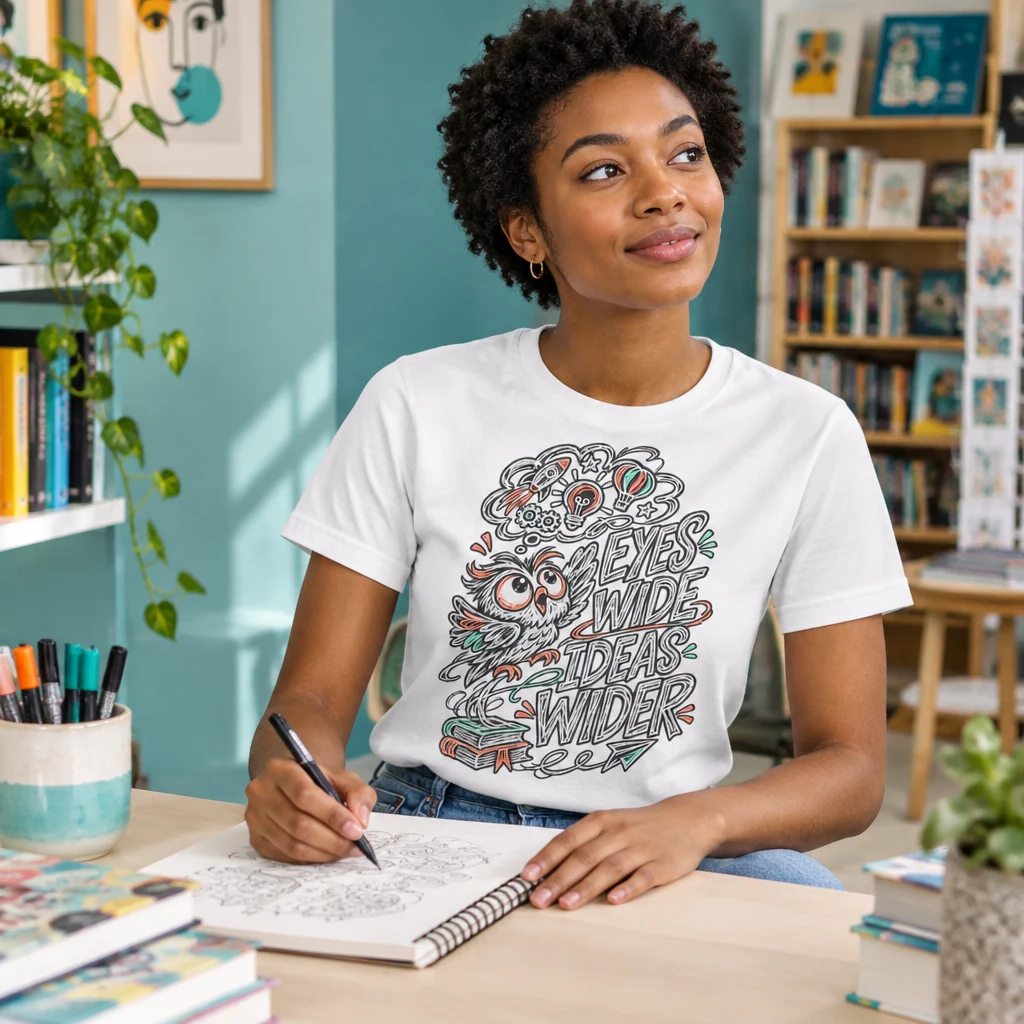
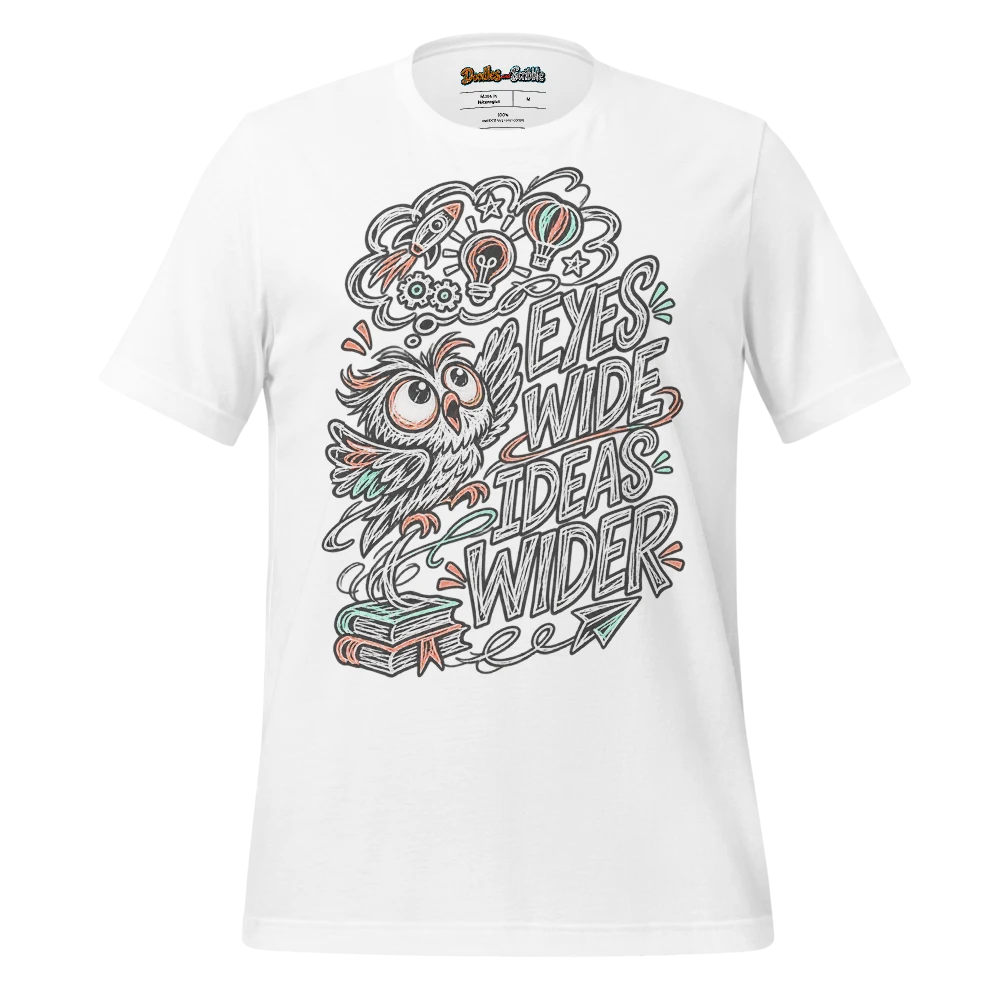
The Eyes Wide Ideas Wider | Doodle Art gives the owl two large eyes and a thought bubble that stretches up into the letters. Look at the eyes first, then let the bubble lead you towards “Ideas Wider”. The print gives you somewhere to go after the face has caught your attention.
The rings around the eyes help them stand out from the darker feathers. Look at how close the lettering comes to the face. The drawing leaves enough space for you to read the eye shape first, even with books, stars and other little marks around it.
Try covering the bubble for a moment. The wide eyes can look surprised on their own. Bring the bubble back and the face reads more like curiosity. One little change in what you can see gives the same owl a slightly different expression.
“Eyes Wide Ideas Wider” extends the expression beyond simple surprise. The wording links an outward feature, wide eyes, with the less visible activity of having ideas. “Wider” gives the phrase its playful lift. The thought bubble supports that reading without requiring a detailed story about what the owl might be thinking.
In the photo, the white tee is worn on its own while the wearer sits at a desk. You can see the owl’s face while she works. If you add a plain jacket, leave it open and check whether you still see the eyes and thought bubble together.
Read the cat’s mood before its message
On “My Mood Drew This”, the cat holds a pencil over the page. A sun, clouds and little weather marks sit above its head. The face gets there first because the eyes are narrowed and slightly askew. The notebook gives the look a reason to stay on the shirt.
Take a closer look at the ears and the line below the nose. These marks keep the face easy to find among the loops. The warmer orange lines draw you back to the cat after you’ve looked at the cooler scribbles higher up.
The exact phrase “My Mood Drew This” adds a joke about authorship. It treats the mood as though it has taken charge of the drawing. That is more specific than a general statement about being grumpy, and the notebook makes the creative connection easier to follow. The cat, object and words each contribute something different.
The cover photo leaves the tee uncovered above blue jeans. The cat and the notebook stay visible. If you wear a cardigan with it, check that you can still see both. The joke about who drew the picture gets clearer when the notebook stays in sight.
The line works even on a day when you’re in a good mood. If you enjoy the cat’s expression, read the full phrase and see whether its joke suits you. That’s the thing you’ll see again each time you pull the tee out.
See how each face gets its expression
The three designs offer a practical way to look through the Faces collection. Start with the broad subject, then examine the expression and finally read the wording. The goose gives posture a prominent role. The owl connects wide eyes with thought. The cat places a mood beside a creative object.
There are several ways to look at a face. The V&A’s drawing collection includes head studies and sketchbooks you can open alongside the product photos. Pick a single line near the eye or chin and ask how much of the expression it carries before you follow the other marks.
Try this short viewing check before settling on a favourite:
- Look at the whole shirt image and identify what catches your eye first.
- Reduce the image to see which shapes remain recognisable.
- Enlarge it and follow the marks around the face where they are visible.
- Read the exact words and decide whether you enjoy their contribution.
- Consider which parts an open layer or a bag strap might cover.
Go back to the first clue after you’ve seen all three. It might be the goose’s neck, the owl’s eyes or the cat’s glance. That quick first read can help you choose which drawing you’ll enjoy seeing again when you only have time for a glance.
Leave the eyes and expression visible
Plain layers make it easier to keep your attention on the face. They are especially useful when lettering and loose contours share the same area. Before adding another patterned piece, look at the outfit as a whole and see whether you can still locate the drawing comfortably.
Placement matters as much as colour coordination. An overshirt edge might cover an eye, while a cross-body strap can divide a phrase. Move the layer or strap and compare. Our guide to styling graphic T-shirts without hiding the artwork explores that practical problem with a different motif.
Try the outfit with the part of the drawing you enjoy most still visible. Move a strap if it crosses the eyes. Open the jacket a little if it covers the goose’s beak. Once you can see the expression, the words and little lines can catch up at their own pace.
Find your favourite
The pieces in this story, together in one place.
Explore the collection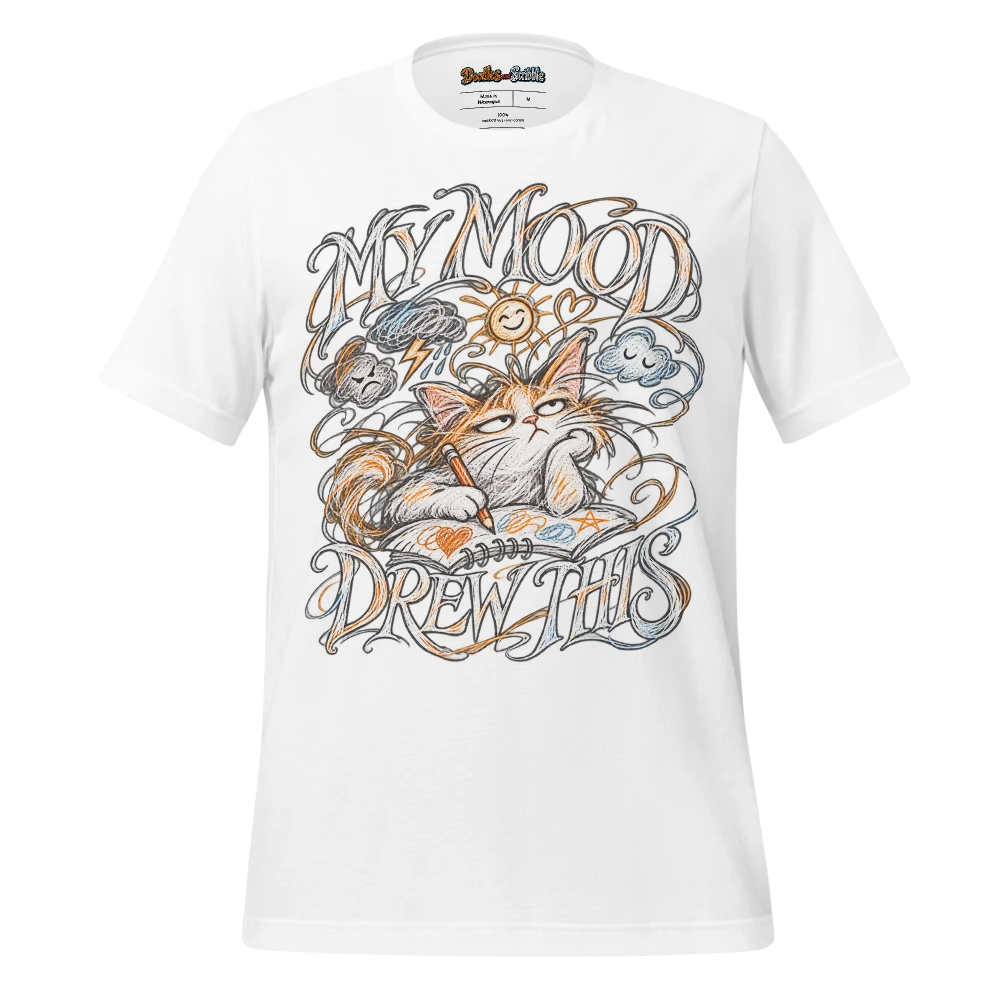 My Mood Drew This | Doodle Art
 Chin Up Lines Loose | Doodle Art
 Eyes Wide Ideas Wider | Doodle Art
 High Definition Low Composure | Doodle Art